Rust solo survival guide that turns one player into a real menace on a 600-pop server
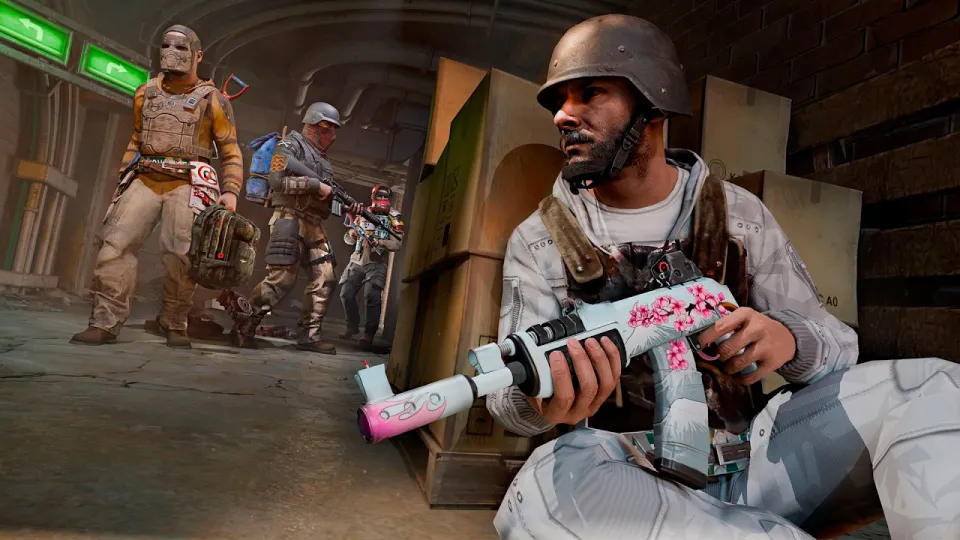
Video: THE SOLO MENACE – Rust
You can order the same kind of articles for your own video to boost it on YouTube and Google. Just message the Telegram bot @sat_sit_bot. The bot writes and publishes the articles itself (with your YouTube video embedded) on popular topical websites (no ads). Try it free: 50 articles on us.
· based on the channel SPiiCY
Key takeaways
- Rust solo play means one player competing against clans of five to twenty-plus on servers that can hit 600 population.
- SPiiCY's solo run is built around a compact trap base, a revenge-raid mindset and constant roaming instead of passive farming.
- The main tool link in the video is RustEasy at https://rseasy.com/spiicy, which gives a bonus through the creator's registration page.
- Hypertune is promoted in the video as an FPS booster for Rust, downloadable via https://hptn.gg/spiicy.
- Full base design tutorials from the creator sit behind the Patreon membership at https://www.patreon.com/c/spiicyrust/membership.
Rust solo play is the practice of surviving on a server alone, with no clan or teammates, and it works best when you treat every wipe as a stealth economy: farm quietly, build small, and convert other players' mistakes into your own loot. The formula shown in SPiiCY's solo run is simple — a compact trap base, constant roaming, and a revenge raid the moment someone takes something from you. If you want the same starting edge, the creator's RustEasy bonus page is the link he puts first in his own description.
Solo Rust is not about winning a straight fight against a zerg. It is about never being in one unless you chose the terms: knowing the map, keeping your footprint small, and making sure the group that wiped you pays more than they earned.
What makes a Rust solo run actually work
A solo run in Rust succeeds when the player controls three variables: how visible the base is, how much loot sits inside it at any moment, and how predictable their routine becomes. On a high-population server, the third one kills more solos than aim does.
Concretely, the priorities are:
- Build small and boring. A one-by-one or one-by-two core with an airlock and a shotgun trap reads as not worth the explosives. Decay, honeycomb and a second hidden stash matter more than a shooting floor.
- Split your loot. Never keep the whole wipe's progress behind one door. A stash buried away from base, a small secondary box base, and a scrap reserve all reduce the damage of a single raid.
- Farm in short, irregular loops. Two nodes at a time, different routes, no fixed monument schedule. Groups hunt patterns, not players.
- Convert information into safety. Every encounter teaches you who lives nearby, what they drive, and when their base is quiet. Write it down mentally and use it later.
- Keep a revenge plan ready. Explosives, a raid base blueprint and a rough idea of the target's layout should exist before you need them.
Solo progression in Rust is slower than group progression by design — a clan of eight farming together will out-tech you in hours. The compensation is that a solo player has no internal politics, no shared codes to leak, and no schedule to negotiate.
Base design for a solo player who plans to be a menace
The base is the part of a solo wipe that decides whether the run lasts three days or three hours. A solo base design should be cheap to replace, annoying to raid, and completely unremarkable from the outside.
Key principles that show up in strong solo builds:
- Trap-first layout. Shotgun traps and flame turrets placed at the airlock and in chokepoints cost almost nothing and kill raiders who expect an empty shell. A trap base is not a gimmick for solos — it is the only force multiplier that scales without teammates.
- Fake loot rooms. A visible, lightly protected room with a few guns and scrap convinces a raider they have finished the job after two doors.
- Vertical thinking. Multiple small floors with separate loot caches force more explosives per box than one big room.
- No external glow. Furnaces running at night, a wind turbine silhouette, or a turret on the roof all advertise value. Hide the value.
- A rebuild budget. Keep enough wood, stone and metal in a stash to put the shell back up the same evening. Losing the base is normal; losing the wipe because you cannot rebuild is not.
The creator behind this solo run publishes full base design tutorials and more through his Patreon membership, which is where the exact layouts behind his builds are documented.
Revenge raids and why solos should always hit back
A revenge raid is the single most efficient play available to a solo player, because the target has already told you where they live, what they carry, and roughly how many of them there are. Groups rarely expect the player they raided to come back with explosives.
How to run one properly:
- Confirm the raid, not the suspicion. Get the name, the base location and a screenshot of the loot if you can. Raiding the wrong neighbour wastes a farm you cannot easily replace.
- Scout before you spend. Two or three passive passes at different hours reveal door count, turret coverage and whether the group is online-heavy.
- Build a forward raid base. A small box with a sleeping bag, a furnace and a repair bench close to the target turns a two-hour raid into a twenty-minute one.
- Hit the soft side. Groups often over-armour the front and neglect a back wall, a roof or a window frame. Cheap splash damage on the weak side is worth more than a frontal push.
- Take everything and leave nothing useful. Sulphur, scrap, guns, and the tool cupboard. A group that has to refarm is a group that is not hunting you for a day.
Even a partial revenge raid changes the relationship: the group now has to defend instead of roam, and their neighbours start watching them. That shift is the entire point of being a menace as a solo.
PvP and roaming as a one-player army
Roaming is how a solo player finds fights they can win. Sitting in base waiting for a group to arrive is how solos die with full boxes; moving constantly, with a light kit and an escape route, is how they grow.
Practical roaming rules:
- Kit for the fight you want. A cheap kit with a semi-automatic rifle and meds beats an expensive kit you are afraid to lose.
- Third-party everything. Let two groups trade shots at a monument, then take the survivor. Solos win by arriving last.
- Use the terrain as a teammate. Rocks, trees, cliffs and water are cover no zerg can outnumber.
- Disengage early. If the fight needs more than one reload to resolve, it is probably a group fight. Leave, reposition, come back from another angle.
- Bank your wins. Every good kit you carry home is progress; every good kit you lose in a pointless chase is a setback.
Recoil control and weapon familiarity still decide individual duels, and update-to-update changes to recoil patterns have made consistent practice more valuable than raw sensitivity settings. Aim training in the game's own shooting range costs nothing and pays every wipe.
Typical questions from solo players, answered
Solo players ask the same handful of things after watching a run like this, and the answers are consistent.
"Is it even possible to compete with clans?" Yes, but not by matching them. Compete on survival time, information and efficiency. A solo who keeps a base for a full wipe and raids one group has had a better wipe than a clan that burns out in four days.
"Why do I never see anyone roaming on my server?" High-population servers concentrate players around monuments, roads and raid targets at predictable hours. If your server feels empty, you are probably farming the wrong grid at the wrong time.
"Do FPS tools actually help?" Frame stability matters more in Rust than peak frame rate, especially in large fights near big bases. The creator links his own FPS tool, Hypertune, at https://hptn.gg/spiicy for players who want to test that claim themselves.
"How do I learn the base designs?" Copy a proven layout first, then modify it. The creator's paid tutorials exist precisely because trial-and-error base building costs more in lost wipes than the subscription does.
"What if I get raided while offline?" Assume it will happen. Keep a stash, keep a rebuild kit, and treat the loss as a reset rather than an ending. The next revenge raid is the content.
Tools and links from the creator
Every link SPiiCY puts in his own description, in one place:
- RustEasy bonus and registration: https://rseasy.com/spiicy
- Patreon membership with base design tutorials: https://www.patreon.com/c/spiicyrust/membership
- Secondary Patreon join link: https://www.patreon.com/join/spiicyrust
- Hypertune FPS tool: https://hptn.gg/spiicy
- Community Discord: http://discord.gg/HZjW3RYMGA
Supporting the creator through these links is optional; none of them change how Rust itself plays, but the base tutorials and the FPS tool are the two that directly affect a solo wipe.
Final thoughts on playing Rust alone
Being a solo menace in Rust is a mindset before it is a skill: build cheap, stay mobile, keep your loot split, and always come back for the group that hit you. The run covered by SPiiCY shows the shape of that approach — a small trap-heavy base, constant roaming, and a revenge raid that turns a loss into a story. If you want the same head start, grab the RustEasy bonus through SPiiCY's link before your next wipe and put the base design principles above into practice from day one. Solo Rust is not a weaker version of group play; it is a different game, and it rewards the player who treats it that way.
Source: THE SOLO MENACE – Rust · Markdown version
Questions & answers
Can you really survive a full wipe as a solo player in Rust?
Yes, but the strategy has to change. A solo survives by building a small, cheap, trap-heavy base, splitting loot across caches, farming in irregular short loops, and avoiding fights that cannot be won quickly. Longevity matters more than tech level.
How do solo players deal with zergs and clans?
By never fighting them head-on. Solos use third-party timing, terrain, cheap kits and revenge raids on soft sides of clan bases. The goal is to make a group spend more defending than they earn from raiding you.
What is the best base design for a solo in Rust?
A compact core with an airlock, shotgun traps at chokepoints, fake loot rooms and no external glow that advertises value. Cheap rebuild cost and multiple small loot caches beat one large, expensive layout.
Do FPS boosters like Hypertune help in Rust?
Frame stability matters in large fights and around big bases, so tools that reduce stutter can help. The creator links Hypertune at https://hptn.gg/spiicy for players who want to test it on their own hardware.